Navigating FRS 102 Compliance The Financial Reporting Standard 102 (FRS 102) compliance standard has transformed how organizations in the United Kingdom & Ireland recognize, measure, and disclose lease arrangements, requiring careful consideration of
Navigating FRS 102 Compliance
The Financial Reporting Standard 102 (FRS 102) compliance standard has transformed how organizations in the United Kingdom & Ireland recognize, measure, and disclose lease arrangements, requiring careful consideration of lease liabilities, embedded leases, and the underlying asset.
For finance professionals—whether you're a CFO, controller, or accountant—understanding and implementing robust lease accounting practices isn't just a regulatory requirement; it's a strategic imperative that can significantly impact your organization's financial transparency, gearing ratios, and business operations. Learn more about Occupier’s FRS 102 compliance software
Understanding FRS 102 Lease Classification Principles
Lease Type Determination: More Than a Simple Classification
At the heart of FRS 102 compliance lies the critical task of accurately classifying leases. Unlike previous accounting standards, FRS 102 introduces nuanced criteria that require a comprehensive assessment of lease agreements. Finance teams must meticulously evaluate the interest rate, lease term, effective date, and future payments to determine whether a lease should be classified as a finance lease or an operating lease.
Key Classification Criteria:
- Ownership transfer at lease conclusion
- Bargain purchase option availability
- Lease term relative to the asset's economic life
- Present value of minimum lease payments
Proper classification directly affects the lessor's balance sheet, financial ratios, carrying amount of the asset, and depreciation calculations.
Implementing Robust FRS 102 Compliance Lease Accounting Processes
Technology and Systematic Approach
Leveraging lease accounting systems and lease management software is crucial in maintaining compliance. Automated solutions help track complex lease liabilities, ROU assets, and balance sheet impacts while ensuring accurate calculations and compliance with significant changes in accounting treatment.
By implementing systematic processes, organizations can:
- Centralize lease contract repositories for entities and smaller entities
- Automate lease classification assessments
- Generate real-time compliance reports based on effective interest method calculations
- Minimize manual calculation errors in interest expense recognition
FRS 102 Financial Statement Implications and Disclosure Requirements
Transparent Reporting Strategies
FRS 102 compliance mandates comprehensive disclosures that go beyond traditional financial statements. Entities must develop robust reporting frameworks that provide stakeholders with clear insights into lease liabilities, depreciation schedules, and the carrying amount of assets.
Key disclosure requirements include:
- Future minimum lease payments
- Interest expense under the effective interest method
- Sublease arrangements and their impact on the lessor’s balance sheet
- Changes in lease classification and reporting period adjustments
Risk Mitigation and FRS 102 Compliance Strategies
Proactive Compliance Management
Successful FRS 102 lease accounting isn’t just about avoiding penalties—it’s about creating a strategic financial management approach. Implement these risk mitigation strategies:
- Conduct regular lease portfolio audits to identify embedded leases
- Establish cross-functional compliance teams within the finance team
- Invest in continuous training on new accounting treatment methodologies
- Develop robust internal control mechanisms for tracking significant changes in lease terms
Leveraging Lease Accounting Software for Seamless FRS 102 Compliance
Navigating FRS 102 compliance requirements manually can be time-consuming and prone to errors, especially when tracking lease liabilities, ROU assets, and financial statement disclosures. Implementing a specialized lease accounting software like Occupier can streamline compliance by:
- Automating lease classification to distinguish between finance leases and operating leases
- Calculating present value of future payments using the effective interest method
- Generating real-time reports to track financial ratios, depreciation schedules, and balance sheet impacts
- Ensuring compliance with international standards while adapting to significant changes in accounting treatment
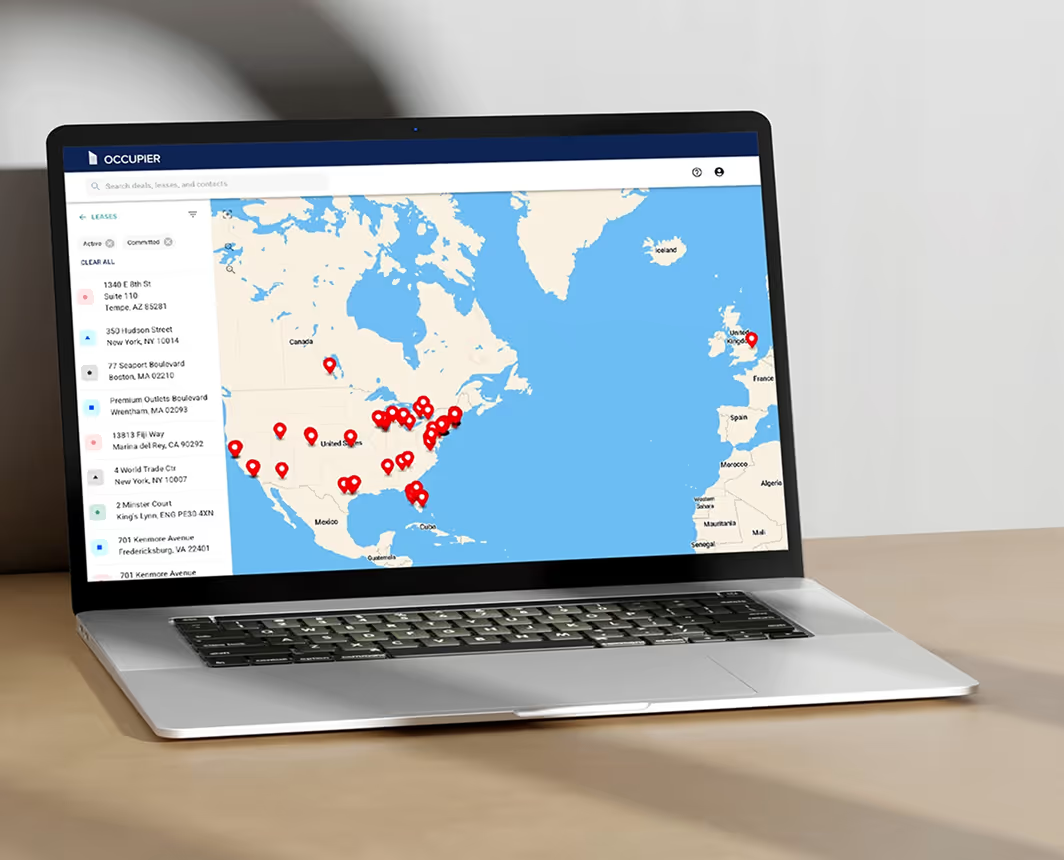
By integrating Occupier’s lease accounting software into your FRS 102 compliance processes, finance teams can reduce manual errors, enhance reporting accuracy, and maintain regulations —all while gaining deeper insights into lease obligations and business operations.
Additional Resources
Disclaimer: This article is for informational purposes and should not be considered legal or financial advice. Always consult with a qualified professional for specific guidance.


Lease management that works for real estate and finance
15,000 sq ft
90 days notice
March 2026
Action required