Mastering CAM Reconciliation: Guide to Streamline Your Expense
What is CAM reconciliation and how does it work?
CAM reconciliation is the annual process of comparing the estimated common area maintenance payments a tenant made throughout the year against the landlord's actual documented expenses. If actual costs exceeded estimates, the tenant pays the shortfall. If actual costs were lower, the tenant receives a credit or reimbursement. Properly reconciling CAM charges ensures tenants only pay their fair share of operating expenses and protects against overcharges.
As a commercial tenant, one of the most complex lease management processes is common area maintenance (CAM) reconciliation. CAM charges cover the costs of maintaining shared spaces like lobbies, parking lots, and restrooms. While these expenses are typically estimated at the start of the year, there are inevitable discrepancies between what you paid and what you actually owe your Landlord.
Properly reconciling CAM charges is crucial for avoiding overpayments and ensuring you only pay your fair share of operating expenses. However, the reconciliation process can be painstakingly difficult without the right processes and technology in place. This comprehensive guide will help you master CAM reconciliation to streamline your financial operations.
What is CAM Reconciliation?
CAM reconciliation is when your landlord evaluates the monthly estimated CAM payments against the actual operating expenses for the year. This process results in either the tenant being reimbursed for overpayments or having to pay any shortfall.
As part of the reconciliation, landlords will provide an itemized breakdown of all shared expenses, payments made, and remaining balance. Diligently tracking your common area maintenance charges across all commercial property leases is tedious yet crucial to ensure your business is not being overcharged.
Get your free CAM reconciliation template here.
What are the different categories of CAM expenses?
CAM expenses fall into two categories: controllable expenses that landlords can manage through competitive sourcing and vendor negotiation, and non-controllable expenses like property taxes, utilities, and insurance that are passed through to tenants without a cap. There are generally two main types:
Controllable Expenses
Controllable CAM expenses are costs that the Landlord has the ability to manage and minimize through competitive sourcing or negotiating with vendors. These "operating expenses" often have embedded caps that limit how much of an increase tenants are responsible for year-over-year. Common controllable expenses include:
- Landscaping and grounds maintenance
- Janitorial and cleaning services
- Repair and maintenance for common areas
- Security and parking attendants
- Administrative staff salaries
- Marketing and promotions
- Capital improvements and equipment replacements
As these services are typically procured in a competitive market, the Landlord can shop around and leverage their negotiating power to keep costs reasonable for tenants.
Non-Controllable Expenses
Non-controllable CAM expenses, on the other hand, are unavoidable costs over which the landlord has virtually no control. As such, these "non-operating expenses" usually do not have statutory caps or limits written into the lease. Examples include:
- Utilities (water, sewer, gas, electric)
- Property taxes and assessments
- Property Insurance
- Snow and trash removal
- Government mandates or fees
Since the Landlord cannot negotiate these costs, any increases incurred are typically passed through to tenants based on their pro rata share of expenses. Reviewing non-controllable costs is still important to validate calculations.
During the reconciliation review, you'll want to ensure each line item expense is properly categorized as controllable or non-controllable based on your specific lease terms. Mis-classifications can lead to overcharges if controllable costs exceed the capped amount. Understanding this distinction is key to paying only your fair share of operating expenses.
Lease Audit: CAM, OPEX & TAX
Allocating your expenses as operating or capital expenditures can have a significant impact on your CAM charges. In the webinar linked here, Occupier Co-Founder and Leasing Expert, Denise Hinkle dive into real estate industry lease audit and annual processes to deploy in to help you with tracking potential incorrect allocation of expense as well as dispute resolution mechanisms,
Why is CAM reconciliation important for commercial tenants?
CAM reconciliation gives tenants the opportunity to recover overpayments, verify every charge against lease terms, and confirm that their pro rata share is calculated correctly based on leased square footage. For landlords, it ensures they recoup any shortfalls from estimated expenses over the year. For tenants, it's an opportunity to get reimbursed for overpayments and verify each charge complies with the lease terms.
The reconciliation process also provides transparency into your operating costs and ensures you only pay your pro rata share based on leased square footage. Any discrepancies can then be audited and addressed.
What makes CAM reconciliation difficult?
CAM reconciliation is complex because every lease has unique expense inclusions, exclusions, and caps, and tenants must manually cross-reference every line item against their specific lease language to identify errors, duplicate charges, and misclassifications.
- Unique lease terms around expense inclusions, exclusions, caps, etc.
- Properly calculating pro rata tenant's shares and gross-up clauses
- Accounting for mid-year changes like relocations, expansions, co-tenancy
- Identifying erroneous charges or duplicate expenses
Manually reviewing every line item and cross-checking it against the lease language is extremely time-consuming and prone to errors. Tenant-specific exclusions enable a tenant to subtract certain tenant contributions from their total, which adds additional calculations.
What are the best practices for streamlining CAM reconciliation?
The most effective CAM reconciliation practices are thoroughly understanding your lease's expense pass-throughs and audit rights, using lease accounting software to automate charge validation, reconciling statements promptly each year, and benchmarking costs across the portfolio to identify outliers.
- Deeply understand your lease: Review expense pass-throughs, caps, audit rights and reconciliation timing requirements.
- Implement a lease accounting software: Automate the labor-intensive validation of each charge against your lease abstracts.
- Promptly reconcile statements: Record receipt dates and review charges annually to identify discrepancies early.
- Benchmark your costs: Monitor your CAM expenses across your full portfolio to identify outliers and negotiation opportunities.
- Leverage historical data: Apply learnings from prior reconciliations to negotiate improved lease terms.
By following these steps, you can turn an overwhelming manual process into a seamless part of your financial operations.
How does lease management software simplify CAM reconciliation?
Purpose-built lease management software automates the validation of CAM charges against lease abstracts, flags overcharges and missed exclusions, and centralizes reconciliation data across the full portfolio so real estate and finance teams can review and resolve discrepancies efficiently. Audits reconciliation statements against your lease abstracts to identify overcharges, missed exclusions, and more.
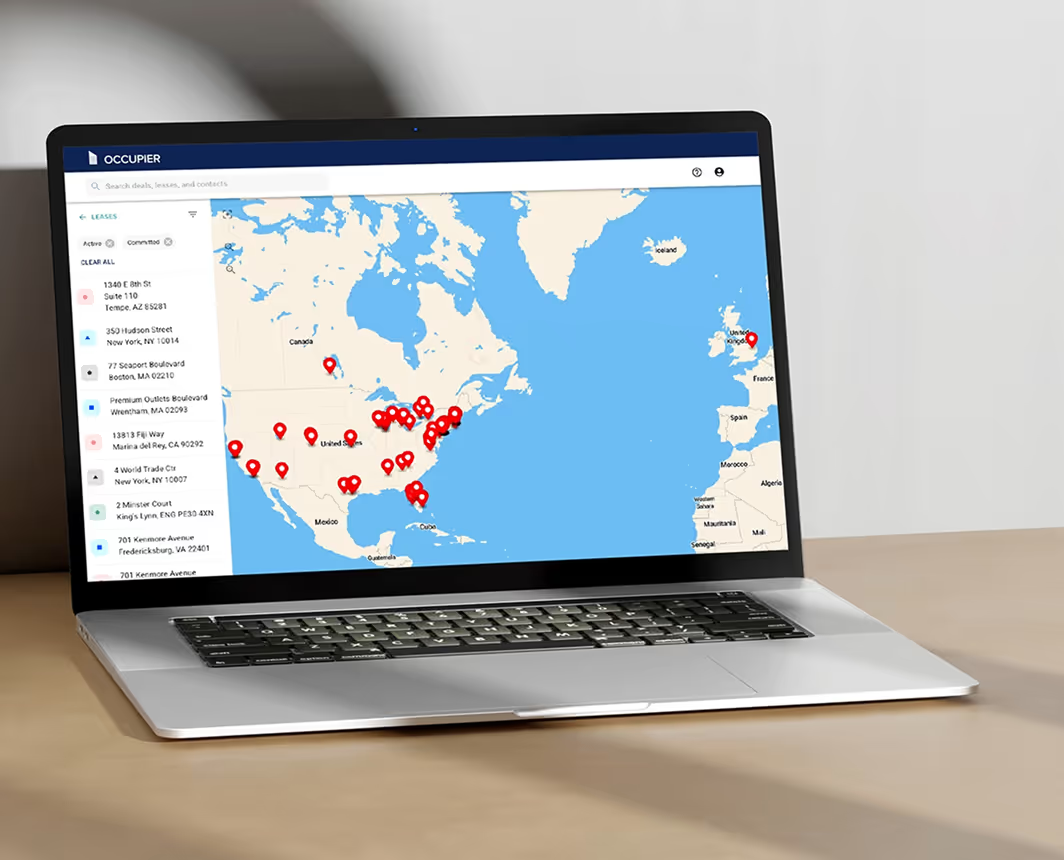
Our centralized lease repository, customizable reporting, and accounting integrations enable you to gain control and visibility over your CAM expenses like never before. Say goodbye to overpayments and massively reduce the time spent on this critical financial process.
Take control of your CAM reconciliation and lease management workflows with Occupier.
Lease management that works for real estate and finance
15,000 sq ft
90 days notice
March 2026
Action required