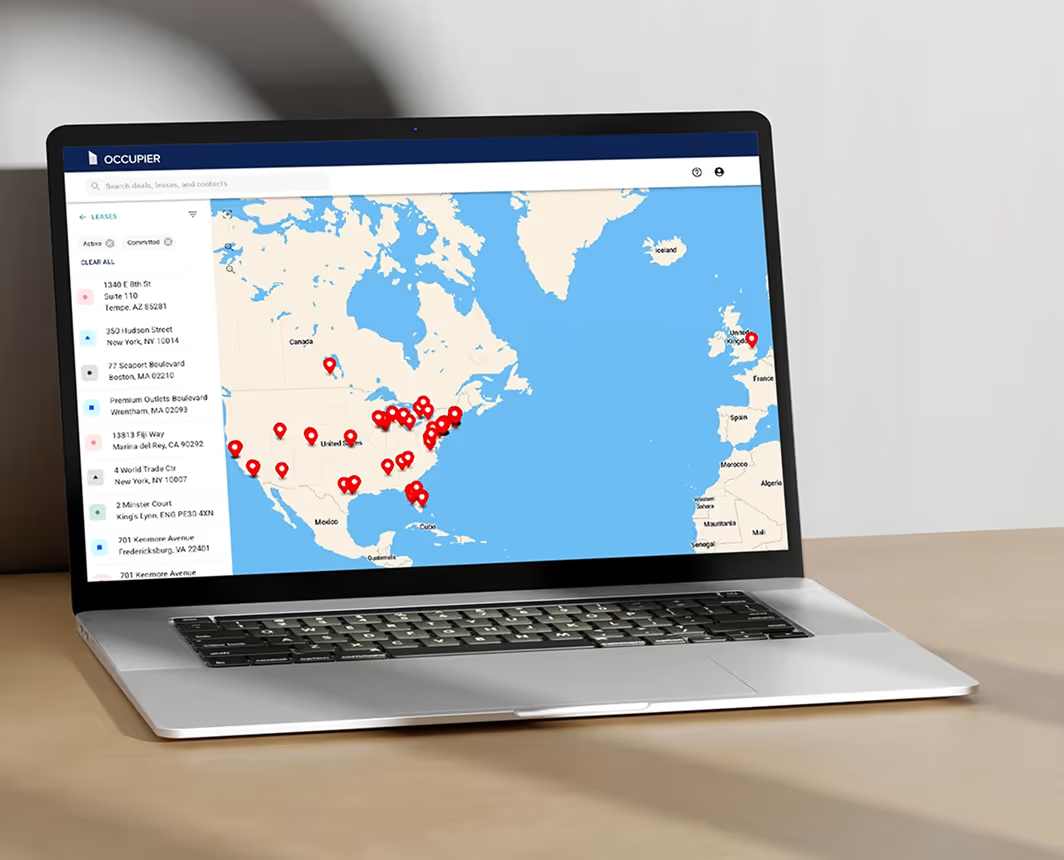
Stop chasing lease data across spreadsheets and email

Occupier centralizes your lease portfolio in one system so real estate and finance work from the same data. No more version control nightmares or endless data requests.
All lease data in one place
Instant visibility across portfolio
Teams work from same data

Before vs After

Before Occupier
With Occupier
Before

Lease data scattered everywhere

Critical information lives in different Excel files, email threads, and PDFs. Nobody knows which version is current.

after

One system for all lease data

Portfolio details, critical dates, clauses, payables, and accounting entries live in Occupier. No more hunting across files.

Before

Real estate and finance work from different numbers

Finance asks for rent schedules. Real estate sends a spreadsheet. Two weeks later, the numbers don't match what's in the GL.

after

Both teams see the same numbers in real time

Both teams work from the same source of truth. When real estate updates a lease, finance sees the change immediately.

Before

Every question requires a manual lookup

"What's our rent next quarter?" means opening five spreadsheets, checking three emails, and hoping you found the latest amendment.

after

Answer portfolio questions instantly

Filter by location, lease type, landlord, or custom field. Get answers in seconds without opening a single spreadsheet.

Before

New team members can't find anything

Onboarding takes weeks because institutional knowledge lives in someone's head or personal files.

after

Lease knowledge accessible to everyone who needs it

Amendment history, clause details, and landlord correspondence stay in the system, not trapped in someone's email or memory.

Before

Reports are outdated the moment you create them

You export data to Excel for a stakeholder report. By the time they see it, two leases have changed.

after

Reports always reflect current data

Pull current rent rolls, expiration lists, and portfolio summaries anytime. Schedule recurring exports that reflect lease changes as they happen. No more outdated snapshots.

Scattered lease data is exactly what
Occupier was built to solve

Occupier replaces scattered spreadsheets and email chains with a single system where your entire portfolio lives. Real estate tracks renewals and obligations. Finance runs close and pulls reports. Leadership gets visibility without chasing people for updates. Everyone works from the same data.
Request Demo
arrow_right_alt
"If we miss a renewal, whether it was a lease we wanted to terminate or one we wanted to renew and the landlord had other plans, that would be pretty significant. Without the visibility from Occupier, that could have a significant impact on our operations."
Jim Baron
VP of Real Estate, Rarebreed Veterinary Partners
centralized data

What changes when you
centralize lease data

Eliminate missed deadlines, reduce compliance risk, and accelerate decisions
check_alert
Never miss critical dates or obligations
Upcoming renewals, option deadlines, and notice requirements are visible across your entire portfolio. Set up automated alerts so the right people know what's coming with enough time to act.
order_approve
Stay ASC 842 compliant
When real estate updates a lease, finance sees the change immediately. ASC 842/IFRS 16 calculations stay accurate, close books faster, and maintain clean audit trails.
gavel
Make decisions with up-to-date data
Pull reports in seconds. Identify cost-saving opportunities like termination rights or co-tenancy clauses. Strategic decisions happen faster when everyone works from the same data.
KEY CAPABILITIES

What you can do with centralized
lease data in Occupier

See your entire portfolio in one dashboard

Every lease detail in one place:

  • Analytics dashboard with rent variance reporting and payment obligations tracking
  • Filter by location, property type, landlord, lease status, or custom fields
  • Saved views let you create custom perspectives and pre-set quick views keep teams aligned

Find what you need in seconds. No more opening ten spreadsheets to answer one question.
Never miss critical dates

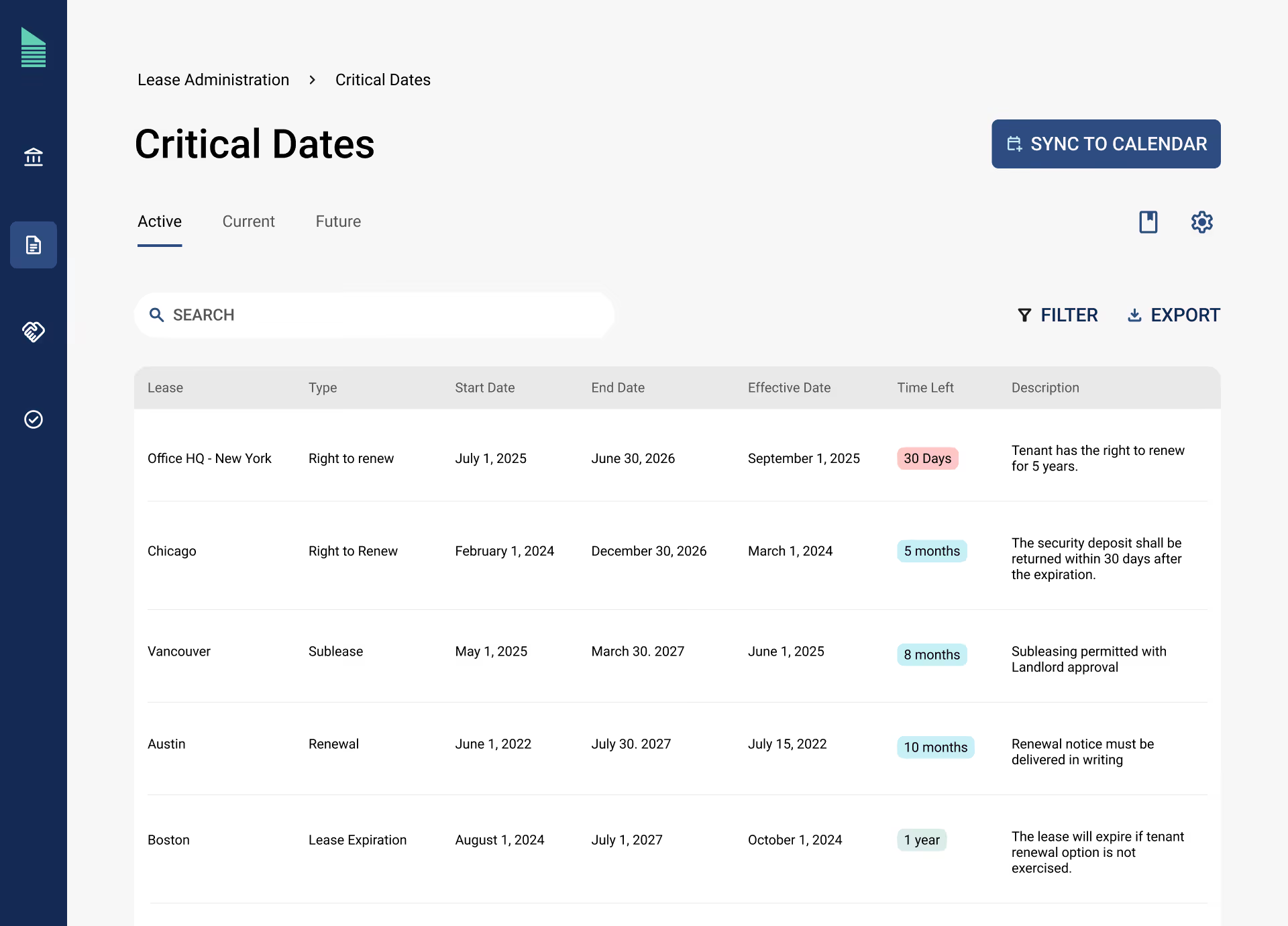
See what's coming before it's urgent:

  • Critical dates dashboard shows all renewals, options, and notice deadlines
  • Filter by expiration date, lease type, or location to see what needs attention
  • Automated alerts notify the right people with enough lead time to act

Eliminate missed deadlines and costly holdovers. Make strategic decisions instead of emergency responses.

Stay ASC 842 compliant

Eliminate data gaps between teams:

  • Lease data flows from administration into accounting without re-entry
  • Finance calculates journal entries from current lease terms automatically
  • Change history documents every lease modification for audit trails

When lease data is centralized, compliance follows automatically.

Occupier Lease Management

Never miss a critical date again.

See how Occupier keeps Real Estate and Finance teams ahead of every deadline
Boston HQ
Size:
15,000 sq ft
Renewal options:
90 days notice
Lease expiration:
March 2026
Status:
Action required
Amend Lease
Set Alert

Frequently Asked Questions

When should you switch from spreadsheets to lease management software?
arrow_drop_down
You should switch to lease management software when you start to manage 30 or more leases. Tell tale signs that it's time to consider a system are: critical dates get missed, real estate and finance work from different versions, and portfolio questions take hours to answer. Lease management software becomes essential when scattered data creates compliance risk or slows down decision-making.
What's the best way to organize lease data across multiple locations?
arrow_drop_down
The best way to organize lease data across multiple locations is to maintain a single source of truth where all lease details—terms, critical dates, clauses, payment obligations—are accessible to everyone who needs them. This eliminates version control issues where real estate has one rent schedule and finance has another. Without centralized data, organizations waste hours reconciling different versions and answering the same portfolio questions repeatedly.
What data should every lease management system capture?
arrow_drop_down
A modern lease management system should capture: critical dates (commencement, expiration, renewal options, notice deadlines), rent schedules with escalations, payment obligations (base rent, CAM, OPEX, percentage rent), and key clauses (termination rights, co-tenancy, renewal options). The system should also track amendment history, landlord contact information, and location details. Without this complete data set, you'll still need spreadsheets to fill the gaps, defeating the purpose of centralized lease management.
 How do I control who can see and edit different lease data?
arrow_drop_down
Occupier uses role-based permissions to control access. Assign users to roles (Admin, Editor, Read-Only) and configure what each role can see and modify. You can also set user-specific permissions for individual leases if needed.