Lease Accounting Audit Checklist
Prepare for your lease accounting audit leveraging our 10-step checklist which features videos, tips, how-to blogs and definitions for each step.
- Prepare with confidence — Ensure all lease data is complete and up to date.
- Catch errors early — Review key areas like ROU assets, liabilities, and disclosures.
- Validate compliance — Check your entries align with accounting standards.
Ready for Your Lease Accounting Audit?
A lease accounting audit is a comprehensive review of a company's lease accounting practices and financial statements to ensure compliance with ASC 842, which mandates recognizing all leases over 12 months on the balance sheet. It involves verifying accurate calculation of lease liabilities and right-of-use assets, testing internal controls, and providing insights to optimize leasing practices.
Frequently Asked Questions
A lease accounting audit is a process to ensure compliance with accounting standards like ASC 842, requiring organizations to recognize most leases on their balance sheets as right-of-use assets and lease liabilities. This audit verifies the accuracy of lease transactions and related financial data.
Conducting a departmental lease survey is crucial for ensuring the completeness of the lease population. It involves corroborating leases through various methods, such as reviewing agreements and analyzing rent expenses, to confirm that all leases are accounted for.
Auditors should request a roll-forward report of right-of-use assets and lease liabilities, draft financial statement disclosures related to leases, and a report detailing significant assumptions used in lease accounting. These documents provide essential evidence for audit analysis.
A lease accounting audit checklist streamlines the auditing process by summarizing key procedures and required documentation. Using this checklist helps ensure that audits are thorough, efficient, and compliant with the new lease accounting standards.
Audit-ready means your financial records, supporting documentation, and internal processes are organized and accurate enough to withstand external scrutiny at any point in time. Rather than scrambling when an audit is announced, an audit-ready organization maintains clean, traceable data as standard practice. For lease accounting, this means current lease schedules, accurate ROU asset and liability balances, and journal entries tied to verified lease data. The goal is to answer any auditor question quickly and confidently, without last-minute reconciliations or cleanup.
Occupier Lease Management
Never miss a critical date again.
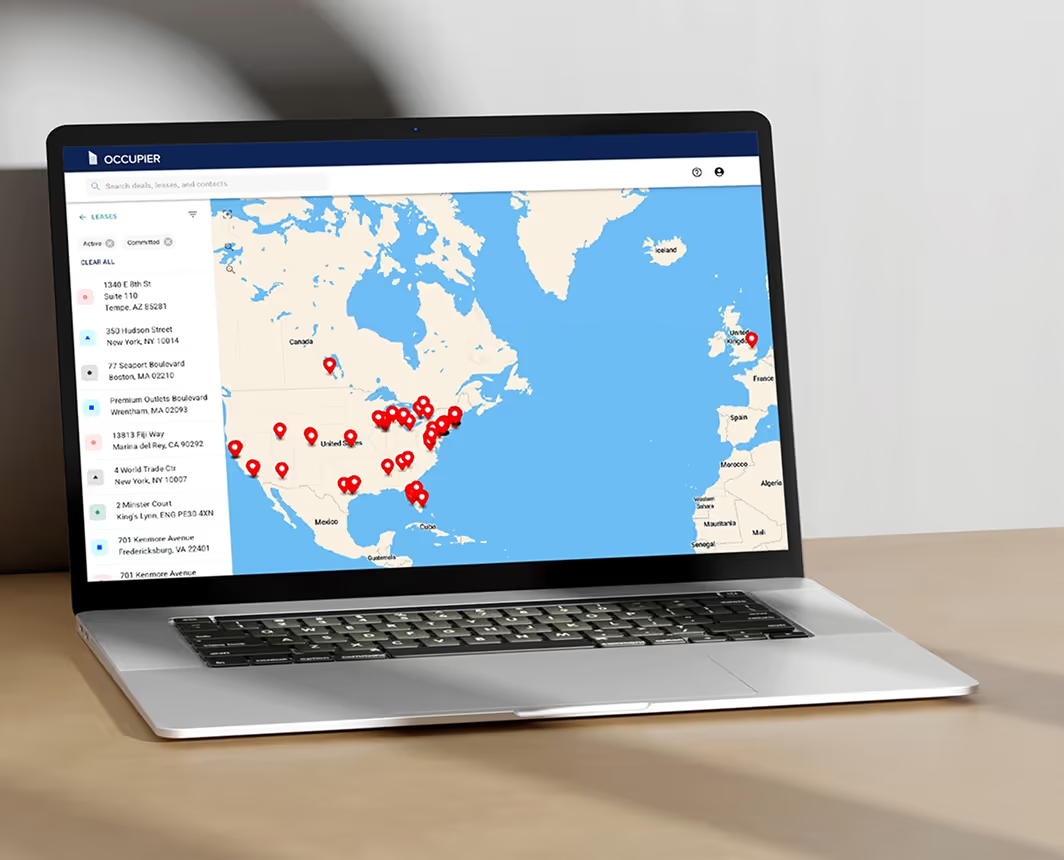
See how Occupier keeps Real Estate and Finance teams ahead of every deadline
Boston HQ
Size:
15,000 sq ft
15,000 sq ft
Renewal options:
90 days notice
90 days notice
Lease expiration:
March 2026
March 2026
Status:
Action required
Action required
Amend Lease
Set Alert