What Is Lease Abstraction? Guide for Real Estate Teams

What is lease abstraction and why does it matter for commercial tenants?
Lease abstraction is the process of extracting critical information from a commercial lease — rent, escalations, critical dates, CAM obligations, termination rights, and renewal options — and organizing it into a structured summary that real estate and finance teams can act on quickly. For organizations managing multiple leases, abstraction eliminates the need to re-read full documents for every decision, reduces the risk of missed obligations, and creates a standardized data set that supports ASC 842 compliance and portfolio-wide analysis.
Commercial real estate leases are often long and filled with complex legal language. These documents contain critical information that outlines financial obligations, operational responsibilities, and legal rights. Lease abstraction takes the entire document and distills it into a concise, structured format that summarizes only the most valuable information.
What is lease abstraction?
Lease abstraction is the process of reviewing a commercial lease agreement and distilling it into a concise, structured summary that captures only the most critical terms. The output — a lease abstract — gives real estate and finance teams instant access to the data they need without reading the entire document each time.
A typical commercial lease runs 50 to 100 pages or more, written in dense legal language. A lease abstract cuts that down to the handful of terms that actually drive financial and operational decisions: base rent, rent escalations, commencement and expiration dates, renewal options, maintenance obligations, and termination rights.
Lease abstraction is foundational to efficient lease administration. As corporate tenants manage increasingly large and complex portfolios, standardizing lease data through abstraction supports better decisions, reduces risk, and keeps real estate and finance teams aligned.
What information does a lease abstract capture?
A lease abstract typically includes:
- Property address and square footage
- Lease commencement and expiration dates
- Base rent, rental rates, and rent escalation schedules
- CAM expenses, insurance requirements, and real estate taxes
- Maintenance obligations and payment schedules
- Security deposits and termination rights
- Renewal options, use clauses, and special provisions
Each of these terms has direct financial and operational implications. Missing a renewal deadline, misunderstanding a rent escalation clause, or overlooking a maintenance obligation can result in unexpected costs, strained landlord relationships, and compliance exposure.
Why is lease abstraction necessary?
Commercial leases are negotiated over time, amended frequently, and drafted by legal teams whose priority is precision, not accessibility. The result is documents that are difficult to reference quickly — and costly to misread.
Lease abstraction solves this by giving every stakeholder — finance, legal, facilities, and operations — access to the same accurate, up-to-date lease data in a format they can actually use. That shared visibility is what keeps financial reporting consistent, deadlines tracked, and obligations met across the portfolio.
Without abstraction, real estate and finance teams are forced to dig through full documents for routine decisions. That friction compounds at scale: a team managing 50 leases across multiple jurisdictions is making hundreds of references to lease terms each year. Abstraction converts that burden into a fast, reliable lookup.
How does lease abstraction reduce portfolio risk?
Real estate is typically a company's second-largest expense. Despite that, many organizations still manage lease data through manual processes — spreadsheets, static PDFs, or fragmented systems — that create visibility gaps and increase exposure to errors.
Lease abstraction closes those gaps. When every key term is captured in a standardized format and accessible to all relevant teams, the risk of missed deadlines, incorrect payments, and compliance failures drops significantly. Accurate abstracts support:
- Consistent financial reporting across the portfolio
- On-time rent payments and escalation adjustments
- Correct CAM reconciliation and real estate tax treatment
- ASC 842 compliance, including ROU asset calculations and critical date tracking
- Proactive lease management — renewals, terminations, and renegotiations handled before deadlines hit
Lease Abstract – Download the Customizable Template:
Our Lease Abstract – Downloadable PDF Template is a comprehensive tool designed to help commercial real estate professionals abstract important lease details efficiently and accurately. The template is organized into six pillars, including general lease information, financial information, lease amendments, critical dates, clauses, and custom data.
How does lease abstraction save time for real estate and finance teams?
Manually reviewing a commercial lease to answer a single question — who is responsible for HVAC maintenance, what is the rent in year three, when does the renewal option expire — can take 20 to 30 minutes on a complex document. Multiply that across a portfolio and a team, and the hours add up fast.
A well-structured lease abstract turns that 30-minute review into a 30-second lookup. That efficiency scales: a facilities team verifying a maintenance obligation, a finance team confirming a rent escalation, a legal team reviewing termination rights — all working from the same abstracted data rather than the same 90-page document.
For organizations with large portfolios, outsourcing lease abstraction to a service with deep industry expertise — or using AI-powered abstraction tools — further reduces the internal burden while maintaining data accuracy and consistent formatting across all leases.
How can abstracted lease data support portfolio analysis?
Abstraction does more than simplify day-to-day lease administration. When lease data is standardized across a full portfolio, it becomes a foundation for strategic analysis.
Real estate and finance teams can use abstracted data to:
- Forecast rent obligations and model escalation scenarios
- Make decisions on their corporate lease portfolio
- Identify leases approaching renewal or expiration windows
- Compare CAM charges and operating expense obligations across locations
- Flag underperforming locations for renegotiation or exit
- Build cash flow models with confidence, knowing the underlying data is complete and accurate
For example, comparing rental rates and CAM structures across a retail portfolio might reveal that two smaller, more flexible locations would be more cost-effective than one large property — a strategic insight that only surfaces when the data is clean and comparable.
What is AI-powered lease abstraction?
AI-powered lease abstraction uses machine learning and natural language processing to extract key lease data automatically, rather than relying on manual review. The output is the same structured summary a human abstractor would produce, but faster and at a lower cost per lease.
For organizations with large portfolios or frequent lease activity, AI abstraction significantly reduces the time from signed lease to actionable data. It also applies consistent extraction logic across every document, reducing the variation that comes from manual processes.
AI abstraction works best when paired with a human audit step — reviewing extracted data for accuracy before it enters a lease management system. That combination of automation and oversight maintains data integrity at scale.
What should you expect from a lease abstraction service?
A lease abstraction service extracts critical data from your lease portfolio and converts complex legal language into structured, searchable summaries. A good service follows a three-stage process:
Plan: Identify all source documents, including amendments, side letters, and embedded leases, and define the data fields relevant to your portfolio and compliance requirements.
Abstract: Machine learning and AI technologies automate the extraction of lease data at scale, applying consistent logic across every document in the portfolio.
Audit: Abstracted data is reviewed for accuracy across critical dates, clauses, base rent, and financial terms before it enters your system of record.
The result is a clean, reliable data set your real estate and finance teams can act on immediately — and a foundation for the lease management and compliance work that follows.
How does lease management software enhance the abstraction process?
Lease abstraction is powerful on its own. Combined with a lease management platform, the abstracted data becomes dynamic rather than static.
Once imported into lease management software, abstracted data supports automated notifications for rent increases and CPI adjustments, task assignment based on critical dates, cross-portfolio search across clause types, and direct integration with accounting and ERP systems for journal entry generation and ASC 842 compliance.
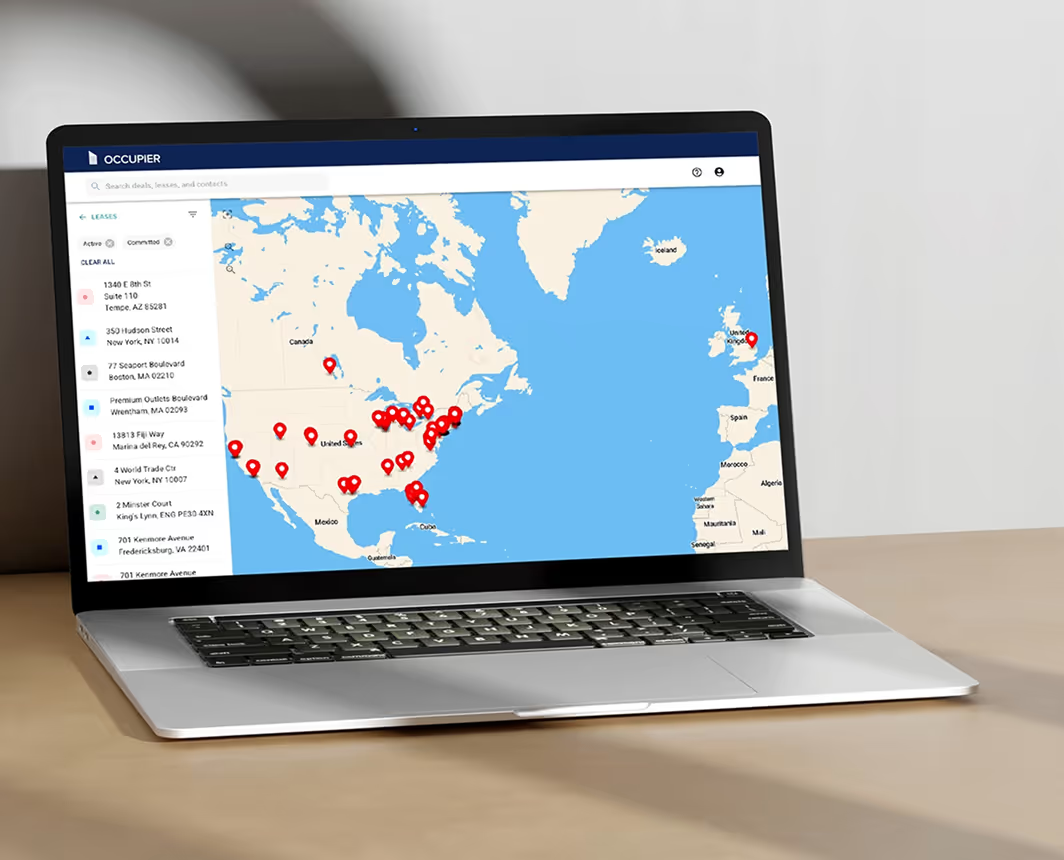
Occupier connects lease abstraction to the full lease lifecycle — from initial data entry through critical date management, financial reporting, and period-end close. Real estate and finance teams work from the same data set, in the same platform, rather than maintaining parallel systems.
Request a demo to see how Occupier supports lease abstraction and portfolio management across your organization.
Frequently Asked Questions
What is the difference between a lease abstract and a lease summary?
The terms are often used interchangeably. Both refer to a condensed version of a lease that captures key terms. "Lease abstract" tends to be used in commercial real estate contexts and often follows a more structured, standardized format designed for data entry into lease management systems.
What does a lease abstractor do?
A lease abstractor reviews commercial lease documents and extracts key financial, operational, and legal terms into a structured format. This can be done manually by a specialist, through AI-powered tools, or through a combination of both.
How long does lease abstraction take?
Manual abstraction of a single commercial lease typically takes two to four hours depending on document complexity. AI-powered tools can reduce this to minutes per document, making large-scale portfolio abstraction significantly more efficient.
Is lease abstraction required for ASC 842 compliance?
ASC 842 requires organizations to identify and record all leases on the balance sheet. Lease abstraction is the most reliable way to ensure every lease is captured, key terms are accurately extracted, and the data required for ROU asset calculations and journal entries is complete and accessible.
What lease terms are most commonly missed without abstraction?
Renewal option deadlines, rent escalation triggers, CAM reconciliation rights, and termination notice requirements are among the most frequently overlooked terms when organizations rely on manual document review rather than structured abstraction.

Lease management that works for real estate and finance
15,000 sq ft
90 days notice
March 2026
Action required