A commercial lease is a legally binding agreement between a landlord and a business tenant for the use of a property, and it works very differently from a residential lease: fewer consumer protections, more negotiating room, and a rent structure that can include base rent plus a share of the building’s operating expenses, depending on the lease type. For commercial tenants, particularly real estate and finance teams responsible for lease accounting and financial planning, understanding how these structures work is essential to budgeting accurately and negotiating well.
This guide covers what makes up a commercial rent structure, the main lease types, the terms worth checking before you sign, and what’s actually involved in negotiating or getting out of one.
What Is a Commercial Lease?
A commercial lease is a contract between a landlord and a business for the use of property, whether an office, retail space, warehouse, or industrial facility, in exchange for rent. Commercial leases typically run three to five years or longer, are highly negotiable, and carry far more of the financial and legal weight on the tenant than a residential lease does.
Commercial Lease vs. Residential Lease
The two look similar on the surface, both involve a landlord renting space to a tenant, but they differ in ways that matter:
- Fewer consumer protections. Commercial leases aren’t subject to most of the laws that govern residential leases, no caps on deposits, no standard privacy protections.
- No standard form. Every commercial lease is customized; there’s no default agreement to fall back on, which means every clause needs review.
- Longer, more binding terms. Commercial leases are harder to break and typically run longer than a residential lease.
- Tenant, not just landlord, pays property costs. It’s common for a commercial tenant to cover some or all of property taxes, insurance, and maintenance, costs a residential tenant almost never pays directly.
- More negotiating room. Landlords expect commercial terms to be negotiated; residential leases are rarely negotiated line by line the same way.
What Makes Up a Commercial Rent Structure?
Base rent is the fixed cost of occupying the space, typically quoted per square foot and paid monthly or annually. It’s influenced by market conditions, location, and building class, and it’s often the number tenants anchor on, even though it’s rarely the full cost of occupancy.
Operating expenses are the additional costs a tenant may be responsible for beyond base rent: property taxes, insurance premiums, utilities, janitorial services, and property management. How much of this a tenant pays, and how it’s calculated, depends entirely on the lease type.
CAM charges cover the maintenance of shared spaces, lobbies, elevators, parking, and restrooms, allocated among tenants based on their share of the building. For the full breakdown of how CAM is calculated and negotiated, see our CAM charges guide.
Ancillary charges round out the picture: signage fees, reserved parking, marketing fund contributions, and tenant improvement maintenance. These are easy to overlook when comparing quoted rents, but they add up.
The Main Types of Commercial Leases
For a full breakdown of the net lease family specifically, including a worked cost example, see our triple net lease guide.
We break each of these down further in our commercial lease types guide and our dedicated gross lease explainer.
Critical Lease Terms to Review Before Signing
Beyond rent structure, a handful of clauses determine how much control and exposure you actually have:
- Grant of lease and commencement date: when the space transfers to you and when your rent and maintenance obligations start.
- Use clause: what you’re permitted to do in the space, and whether you have exclusive use protection against a competing tenant in the same building.
- Assignment and subletting rights: whether you can transfer or sublease the space, and under what landlord-approval conditions.
- Obligation for repair: which repairs the landlord is responsible for versus which fall to you.
- Rent abatement: whether rent is reduced or eliminated if the space becomes unusable due to fire or other damage.
- Condemnation: what happens if the property is taken by eminent domain during your lease term.
- Option to purchase or renew: whether you have the right to buy the property or extend the lease, and on what terms.
- Default and remedies: what counts as a default under the lease, and what recourse either party has.
These are exactly the clauses a landlord’s lease form is drafted to favor the landlord on by default; treating the initial lease as a starting point for negotiation, not a final document, is standard practice. Our resource library includes templates and calculators for modeling rent scenarios before you commit.
How Lease Term Length Affects Rent and Flexibility
Longer lease terms typically come with lower base rent and better concessions, since they give the landlord more certainty. Shorter terms cost more but preserve flexibility for a business whose space needs might change. Real estate and finance teams should size the lease term against actual business forecasts, not just whichever term gets the best headline rate, since a five-year commitment that outlives your space needs is its own kind of cost.
Sublease and Assignment Rights
A sublease lets a tenant rent part or all of their space to another party while remaining responsible for the original lease. An assignment transfers the entire lease obligation to a new tenant, typically subject to landlord approval. Subleasing is a common way to offset costs on space you’re not fully using; assignment is a full exit, if the landlord agrees to it. Both are worth negotiating into the lease upfront, since trying to add these rights after signing is a much weaker negotiating position.
How to Negotiate a Commercial Lease
Effective negotiation starts before you ever see a proposed lease: know the market rate for comparable space, know your actual operational requirements, and understand how each lease type affects total occupancy cost, not just base rent. From there:
- Negotiate the rent structure, not just the number. A lower base rent on a gross lease can cost more than a higher base rent on an NNN lease once operating expenses are factored in.
- Push for caps on operating expense increases, particularly on controllable costs the landlord has direct influence over.
- Ask about exclusive use protection if a competing business in the same building would hurt you.
- Negotiate expansion or renewal options if there’s any chance you’ll need more space, or the same space longer, than the initial term.
- Get financials in order before you negotiate. Landlords typically want to see business financials, tax returns, and sometimes a personal guarantee before finalizing terms, especially for newer businesses; having these ready shortens the process and strengthens your position.
How to Break or Get Out of a Commercial Lease
This is one of the most-searched commercial lease questions, and the honest answer is: it depends heavily on what’s actually in your lease and your state’s law. Common paths include:
- Check for an early termination clause. Some leases include one, often with a termination fee or penalty specified upfront.
- Negotiate a buyout with the landlord. Landlords sometimes prefer a negotiated exit over a prolonged vacancy or default risk, especially if the space is easy to re-lease.
- Sublease or assign the space, if your lease permits it, to offset the remaining obligation instead of terminating outright.
- Review force majeure and casualty clauses, which may allow termination under specific circumstances like the space becoming unusable.
- Understand the penalty for breaking the lease outright, which typically includes liability for remaining rent. In many states, commercial landlords have a duty to try to re-lease the space and offset what you owe, but that duty varies by state and can be modified by the lease itself, so check both before assuming it applies.
Breaking a commercial lease without a clear contractual path out is a legal question, not just a negotiation one; this is a point where getting a real estate attorney involved early is worth the cost relative to what’s at stake. Everything in this section is general information, not legal advice; your lease and your state’s law control.
ADA Compliance in Commercial Leases
The Americans with Disabilities Act requires businesses open to the public, and employers with 15 or more employees, to maintain accessible premises. Who pays for ADA-related modifications, ramps, doorway widths, accessible restrooms, should be explicitly addressed in the lease rather than assumed, since responsibility can fall on either party depending on how the lease is written.
Why This Matters for Real Estate and Finance Teams Together
Commercial rent structures directly affect occupancy costs, balance sheet liabilities, and ASC 842 lease classification, which makes them one of the more consequential decisions a company makes, not just a real estate one. Real estate teams negotiate the structure; finance teams live with its accounting and cash flow consequences for the life of the lease. When those two functions are working from the same lease data instead of two separate views of it, both the negotiation and the compliance side get easier.
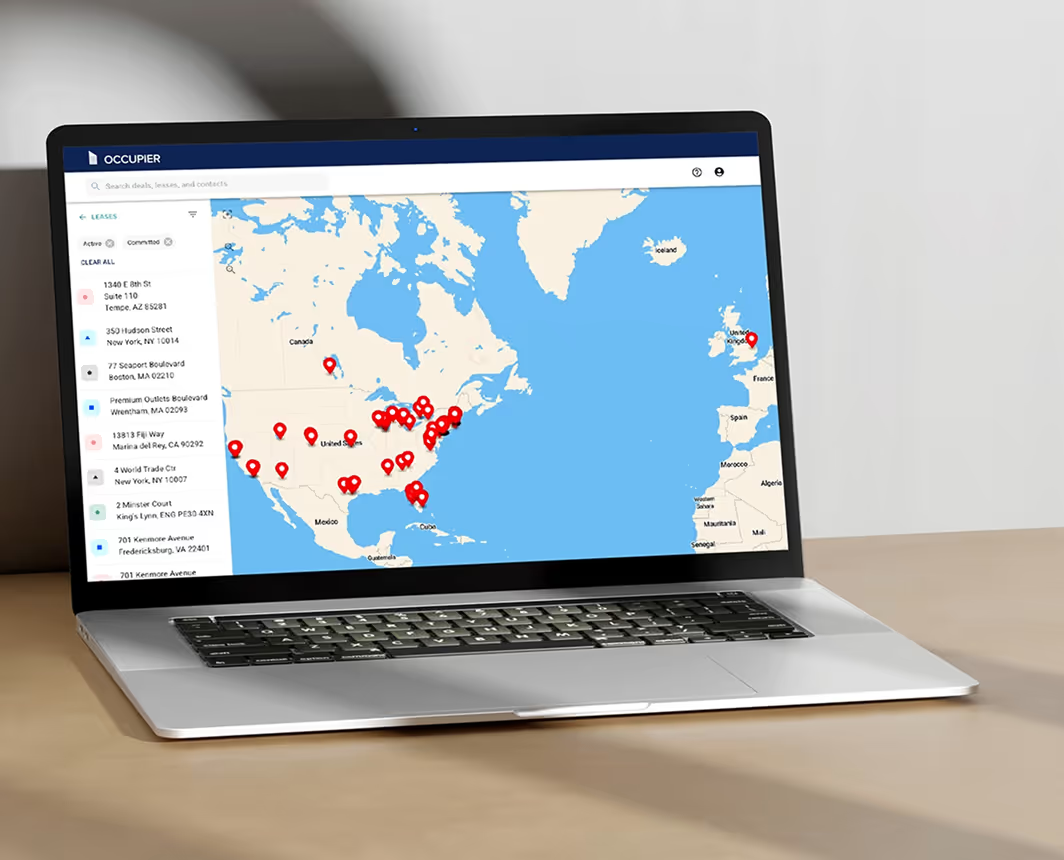
Occupier keeps lease terms, rent structure, and ASC 842 accounting in one system, so a decision made at the negotiating table is immediately visible to the team responsible for the numbers it creates.
See how Occupier connects lease negotiation and accounting →
Commercial Lease FAQs
What is a typical commercial lease deposit? It varies widely by market and tenant creditworthiness, but a security deposit plus one to two months of rent is a common baseline. Larger or newer businesses may be asked for more, sometimes including a personal guarantee.
How long is a typical commercial lease? Most run three to five years, though single-tenant net leases can run 10 to 15 years or longer.
What is the standard commission for a commercial lease? Commission structures vary by market and broker, and are typically paid by the landlord as a percentage of the total lease value, though the exact rate is negotiated deal by deal.
What financials are needed for a commercial lease? Landlords commonly ask for business financial statements, tax returns, and sometimes a personal guarantee, particularly for newer or smaller businesses without an established credit history.
Who is responsible for roof repairs in a commercial lease? It depends on the lease type. In a standard triple net lease, structural repairs like the roof often still fall to the landlord; in an absolute net lease, that responsibility shifts to the tenant. The lease language is the only reliable answer, not the general lease category.
Can you break a commercial lease? Only through a path the lease or applicable law provides, an early termination clause, a negotiated buyout, a sublease or assignment, or a casualty/force majeure provision. Breaking a lease without one of these typically leaves you liable for remaining rent, though in many states the landlord has a duty to try to re-lease the space. That duty varies by state and by lease, so verify it applies to yours.
Are utilities included in a commercial lease? Depends on the lease type. Gross leases typically include utilities; net leases usually don’t, billing them separately or passing them through as part of operating expenses.

Lease management that works for real estate and finance
15,000 sq ft
90 days notice
March 2026
Action required